Key takeaways
- Room-side condensation often involves indoor humidity, surface temperature, and airflow.
- Better-sealed replacement windows can make existing ventilation needs more apparent.
- Condensation does not prove hidden mould, but persistent dampness warrants investigation.
- ENERGY STAR certification does not mean a window is condensation-proof.
Condensation After Window Replacement: What Your Home May Be Telling You
You’ve replaced your old windows, the rooms feel more comfortable, and the drafts are gone. Then a cold morning arrives—and you notice water on the inside of the glass.
It’s understandable to wonder whether something is wrong with your new windows. But room-side condensation often points to a different issue: indoor air that contains more moisture than cold surfaces can handle.
Your windows may be the easiest place to see that moisture. Treat persistent condensation as a reason to investigate the home’s humidity, ventilation, and window conditions together.
Why can condensation appear after replacing windows?
Older, leaky windows can let indoor air escape through uncontrolled gaps. Better-sealed replacement windows reduce that leakage. If household moisture production stays the same and ventilation does not keep up, indoor humidity can rise.
Natural Resources Canada specifically notes that some homeowners see more condensation after replacement because their old windows had been helping moisture escape. The answer is controlled ventilation and moisture management—not bringing back drafts. Read NRCan’s window guidance.
How water ends up on the glass
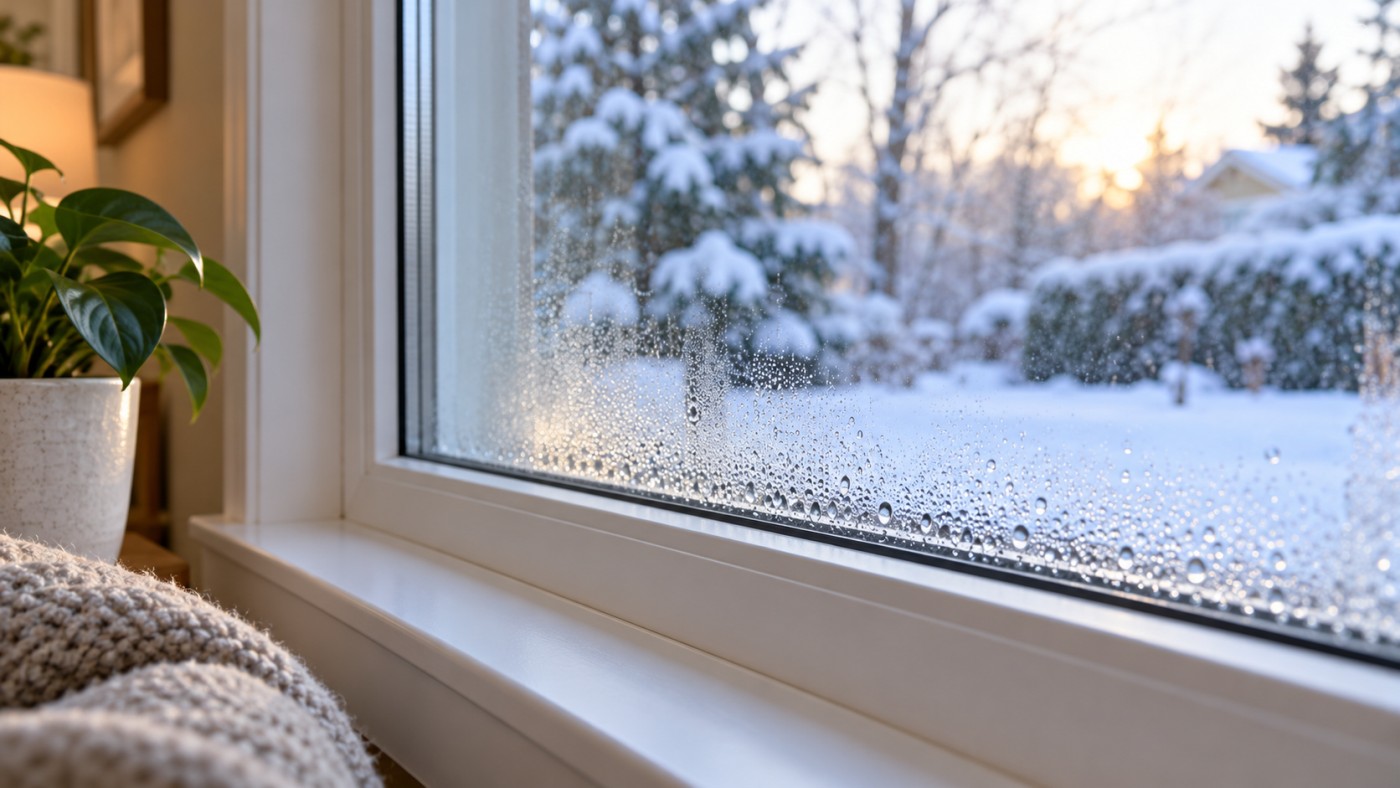
Cooking, showering, laundry, and everyday living add water vapour to indoor air. When moist air meets a surface below its dew point, some of that vapour becomes liquid.
That is why condensation is often most noticeable during cold weather, along glass edges, or behind closed blinds. Glass temperature, outdoor conditions, indoor humidity, and air circulation all affect when droplets appear. NRCan explains condensation and airflow around windows.
First, check where the moisture is
| Where you see it | What it may mean | Your next step |
|---|---|---|
| On the room-side glass; it wipes off from indoors | Indoor moisture meeting a cool surface | Measure humidity and review ventilation and airflow |
| Between the panes of a sealed glass unit; neither surface wipes clear | A possible insulating-glass seal failure | Contact the window supplier for an assessment |
| On the outside surface | Outdoor air condensing on cool exterior glass | Observe whether it clears as conditions change |
| On trim or walls, especially after rain | Possible water entry or another moisture problem | Request an inspection rather than assuming humidity is the cause |
This distinction matters. A humidity explanation should never be used to dismiss a leak, installation concern, or glass-unit problem.
The window can be a visible warning
A wet pane is easy to notice. Moisture elsewhere in a building can be harder to spot.
Persistent dampness can support mould, including in concealed areas such as wall or ceiling cavities. Condensation on glass does not prove there is mould inside your walls. It does mean recurring moisture deserves attention rather than simply being wiped away and forgotten.
Musty smells, staining, peeling finishes, or damp materials are reasons to investigate. If you suspect hidden mould, ask a qualified professional to assess the source; do not open walls simply because a window fogs. Health Canada’s moisture and mould guide.
What about ENERGY STAR® certified windows?
Alpha Windows offers ENERGY STAR® certified windows, as described on our product website. Ask our team for the certification and performance information for your selected model and glass configuration.
Certification identifies energy performance; it is not a promise that glass will never collect condensation. Even an efficient window can develop room-side moisture when indoor humidity is high enough or outdoor temperatures are low enough.
A good window and a well-managed indoor environment work together. Replacing windows improves one part of that system; it does not remove the moisture generated inside your home.
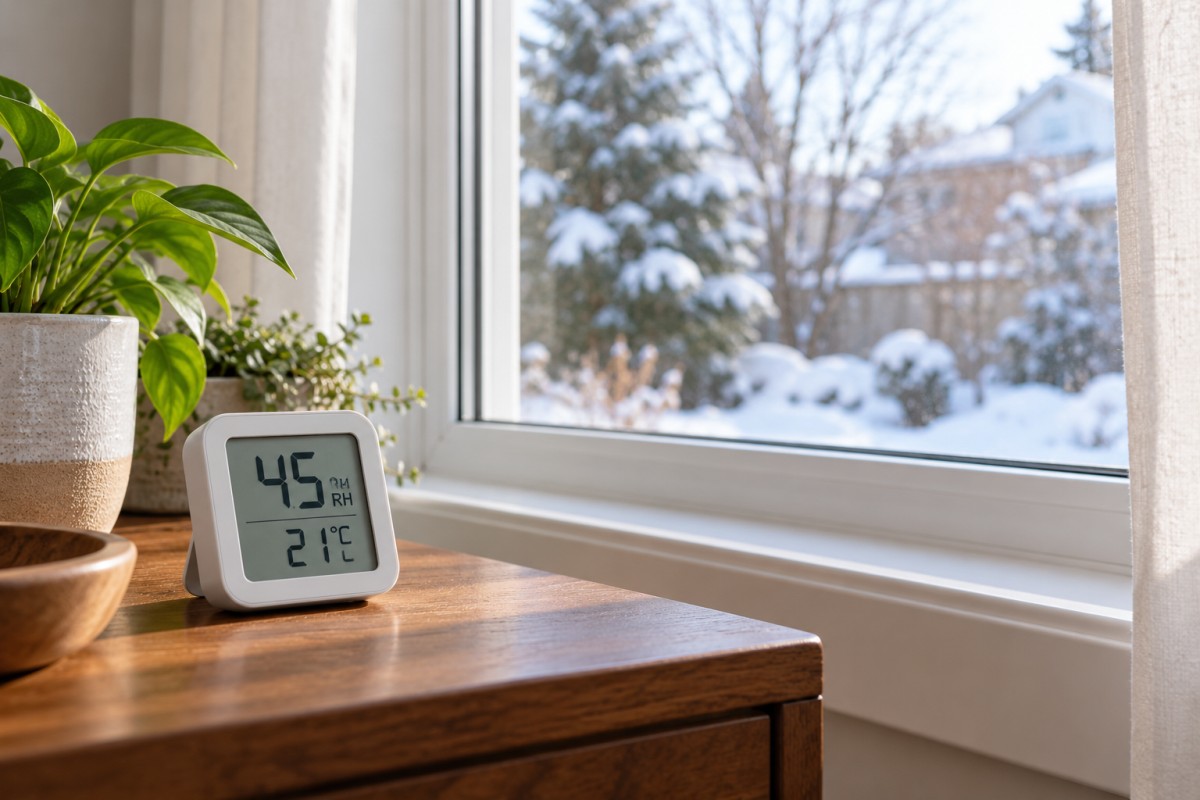
AI-generated illustration of monitoring indoor humidity.
A practical plan for homeowners
- Measure rather than guess. Use a hygrometer and record readings in affected rooms, along with outdoor conditions and when condensation appears.
- Review humidity settings. Health Canada generally recommends 30–50% relative humidity. During cold weather, lower levels may be needed to prevent condensation; there is no single setting that suits every home and temperature.
- Use ventilation where moisture is produced. Run bathroom exhaust fans and a kitchen hood that exhaust outdoors. Have weak or ineffective extraction checked.
- Check your humidifier. Reduce its output if it is contributing to excess moisture. Have an HVAC professional review whole-home ventilation or HRV/ERV operation where needed.
- Let indoor air reach the glass. Open window coverings periodically and keep heating outlets unobstructed.
- Dry accumulated water. Protect sills and finishes while addressing the cause.
- Escalate persistent problems. Recurring water, musty odours, staining, or suspected leaks deserve a professional assessment.
For general humidity guidance, see NRCan’s explanation of how a home handles moisture.
Concerned about condensation on your new windows?
Start by noting where the water appears, when it happens, and the indoor humidity reading. Photos can help our team distinguish surface condensation from a concern that needs closer inspection.
Contact Alpha Windows to discuss your observations. We can help assess window-related concerns and identify when a ventilation or building-moisture specialist should be involved.
Your windows can provide an early clue. Understanding the cause—and acting on persistent moisture—is what protects your home.
Article images are AI-generated illustrations, not photographs of an Alpha Windows installation.