Key takeaways
- Identify whether the haze is on an accessible surface or appears inside a sealed unit.
- Record the room, timing, photographs and product information before requesting service.
- Ask whether the glass unit can be replaced while retaining suitable existing components.
Fog Between Window Panes: What to Record Before Requesting Service
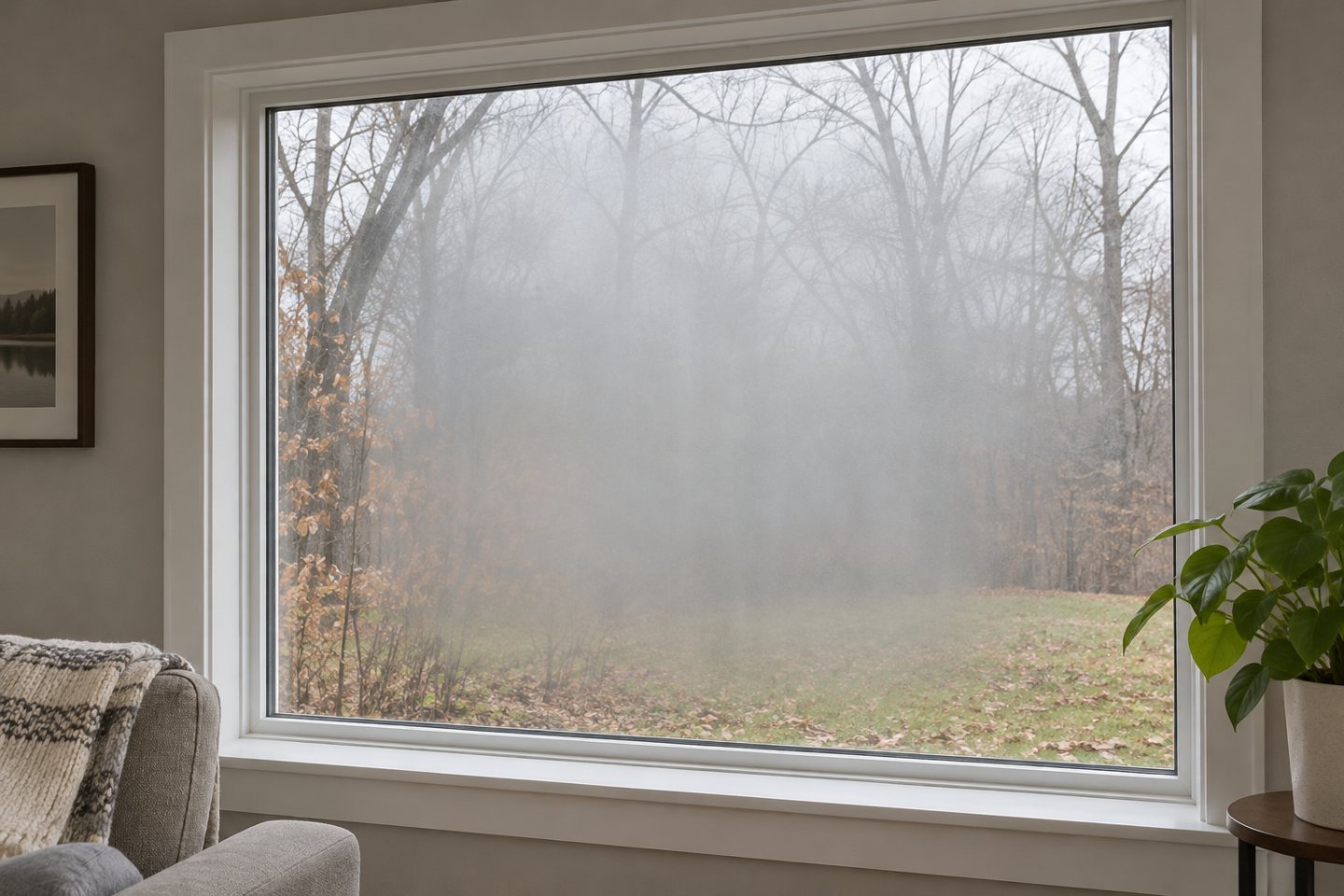
A cloudy patch on a window can look like ordinary morning condensation. But if normal surface cleaning leaves the same haze behind, it is worth describing the problem more carefully before reaching for another cleaner.
Moisture on the room-side glass and moisture inside a sealed glass unit call for different next steps. This guide focuses on preparing a useful service request when fog appears to be trapped between the panes.
First, locate the haze
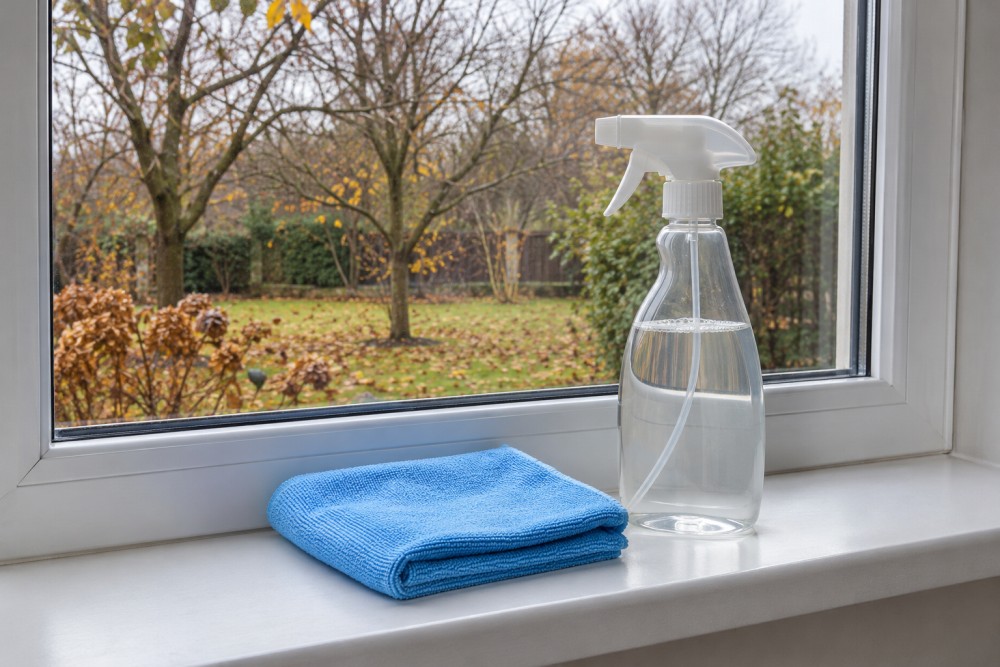
From a safe position indoors, inspect the glass in daylight. If the surface is accessible, use only the product-approved cleaning method to check whether the mark is on that surface.
Do not lean outside, remove a sash or use a ladder simply to prove where the haze is. Tell the supplier when the exterior surface cannot be safely checked.
Note whether the appearance changes with sunshine or outdoor temperature. A mark that comes and goes can still be worth documenting; wait for a visible episode to take photographs.
If you are dealing with moisture that wipes off from indoors, our guide to condensation after window replacement covers the broader humidity and ventilation questions.
What does an insulating glass unit do?
Many modern windows contain a factory-sealed insulating glass unit, often called an IGU. It is the glass assembly held within the window, rather than the entire frame and its connection to the wall.
Natural Resources Canada’s condensation guidance identifies moisture between the glass panes as a possible consequence of a broken seal and points to replacement of the insulating glass unit.
That makes the location of the moisture important. A room dehumidifier or a different surface cleaner does not address a failed sealed-unit edge seal. Have the supplier confirm the diagnosis rather than treating every cloudy mark as proof of failure.
Separate three kinds of “seal”
The word “seal” can describe different parts of a window. Being specific helps prevent a conversation about the wrong repair.
| Part being discussed | What to clarify |
|---|---|
| Sealed glass-unit edge | Is moisture entering the enclosed glazing space? |
| Weatherstripping around an opening sash | Is the moving window closing and sealing correctly? |
| Frame-to-wall installation connection | Is there an air- or water-entry concern around the opening? |
Fog inside an IGU is not, by itself, evidence that every other seal has failed. Equally, replacing a glass unit does not automatically resolve an unrelated leak around the frame.
Mention water staining, difficult operation or moving air separately so those concerns can be assessed on their own merits.
Make the photographs useful
Take one photograph showing the whole window and another showing the affected area. Try a different angle if reflections hide the haze, and record the date and room.
Useful details include:
- Whether one pane area or several window units are affected.
- When you first noticed the problem.
- Whether it changes during the day.
- Which accessible surfaces were checked.
- Any visible product label or order reference.
- Separate concerns such as cracking, water entry or unreliable operation.
Do not remove trim, glazing beads or seals to find a label. Send what is safely visible and ask the supplier what else would help.

Ask about glass-unit service before assuming full replacement
A failed glass unit and a damaged overall window are different scopes of work. Ask the assessor whether a compatible replacement IGU is appropriate and whether the existing frame and sash remain suitable.
The answer depends on the actual window, its condition and the availability of a correctly specified replacement. Avoid assuming that every unit can be serviced, or that a fogged pane means the whole opening must be rebuilt.
If full replacement is recommended, ask which additional conditions support that recommendation. Request a written description of what will be removed, retained and replaced.
Confirm the replacement specification
If glass-unit replacement is proposed, ask how the supplier will confirm dimensions, glass construction, coatings and any other relevant requirements.
Do not order production glass from a homeowner’s approximate measurements or a photograph alone. Have the responsible supplier explain its final measurement and approval process.
If the proposed glass differs from the original, ask about appearance and performance before authorising the work. This is particularly useful when adjacent windows form one visible group.
Check records without assuming coverage
Find the final order, installation date, invoice and written warranty. Ask who handles the service request and which documents are required.
Coverage, exclusions, labour and other charges depend on the applicable written terms. A photograph of fogging does not establish warranty eligibility on its own.
Our window warranty and service-records checklist explains what to keep together for future enquiries.
Avoid improvised “fixes”
Do not drill the glass, inject chemicals or apply extra sealant to an unfamiliar part of the unit. Ask what a proposed service method actually restores and what performance, if any, is supported in writing.
Surface cleaning should follow the exact product instructions. For ordinary cleaning marks and care, see how to clean new windows without damaging glass or finishes.
Cracked glass, a loose component or active water entry needs its own prompt assessment; do not wait for a convenient fogging photograph before reporting it.
Send Alpha Windows a clear service brief
For an Alpha Windows order, start with your order reference, the room, a full-window photo and a close-up of the concern. Explain whether the haze appears to be on a surface or within the glass assembly, and include any uncertainty.
Ask the team to confirm the next assessment step and the available service route. If replacement is appropriate, review the final specification and scope before ordering.
A precise description will not replace an inspection, but it gives the conversation a much better starting point.