Key takeaways
- Wait for confirmed finished-opening dimensions before ordering custom coverings.
- Check mounting permission, window operation and access for cleaning.
- Include winter airflow and cordless safety in the covering choice.
Curtains and Blinds After Window Replacement: Plan the Fit Before You Buy
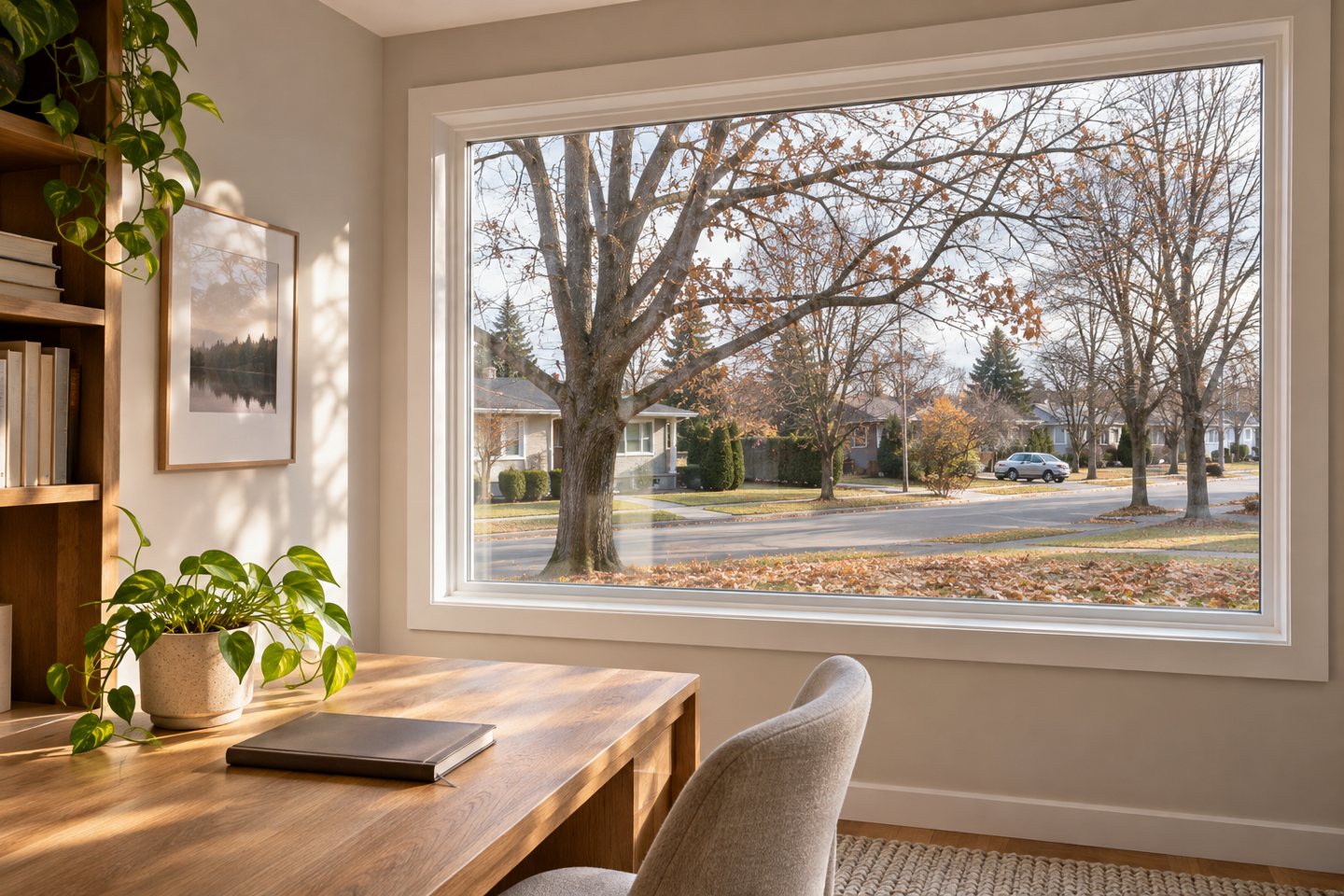
New windows can change more than the view. A different frame, sill, trim detail or operating style may affect whether your existing blinds fit and where curtains should sit.
With shorter November days bringing privacy and winter comfort into focus, it is a good time to plan coverings alongside the window project. A few checks before ordering can prevent an awkward fit after installation.
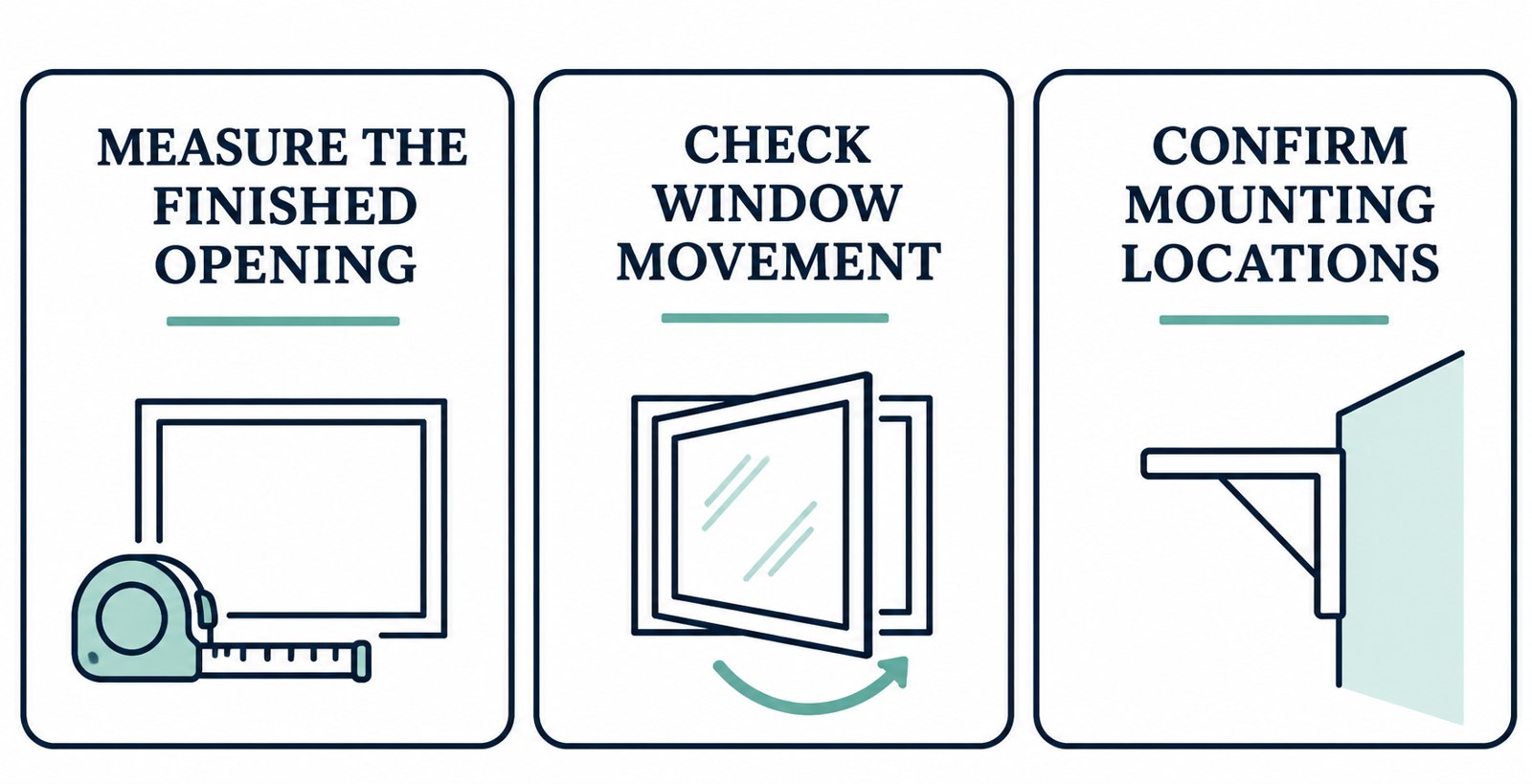
Confirm what the finished opening will look like
Ask the window supplier which parts of the existing opening will remain and which will change. The answer may affect the space available for an inside-mounted blind or the position of a curtain track.
Discuss the final frame, trim, sill and reveal—the recess around the window—rather than relying only on the old glass dimensions.
If you are comparing installation approaches, our retrofit and brick-to-brick guide explains why the scope should be clear before related finishing decisions are made.
Keep planning measurements separate from ordering measurements
Photograph the existing coverings and note their approximate dimensions for discussion. Keep the brackets and labels together if the installer asks you to remove them.
For custom coverings, have the covering supplier explain when final measurements should be taken. Do not assume an old blind size or an early window estimate is the correct production dimension.
Ask whether the finished opening must be installed and trimmed before the covering order is approved. Confirm who is responsible for final measuring, installation and any adjustment if the covering does not fit.
Check the full operating movement
A covering that looks clear of the glass may still interfere with a handle, sash, screen or tilt-cleaning feature.
Ask to review the proposed window’s movement before choosing a blind depth or curtain position. Consider the window fully open as well as closed, and include the space needed to reach locks comfortably.
Useful questions include:
- Will a raised blind leave room for the sash to move?
- Can the handle be used without moving the entire covering?
- Can screens be removed as intended?
- Can the glass be cleaned safely?
- Will curtains catch on operating parts?
Never modify window hardware to accommodate a covering. Ask the two suppliers to resolve the layout first.
Get mounting instructions before drilling
Confirm suitable fixing locations with the window and covering suppliers. Do not assume that an exposed part of the new frame is an approved place for a screw.
Ask whether mounting affects product care or written warranty terms. Keep the answer with the order documents, especially if different companies supply the window, trim and coverings.
Where an outside mount is proposed, discuss the wall or trim fixing and the finished appearance. A neat installation depends on the actual substrate and product instructions, not just the bracket shown in a catalogue.
Leave room for winter airflow
Privacy and room comfort matter, but check what happens at the glass when coverings stay closed.
Natural Resources Canada explains that closed drapes and blinds, deep sills and nearby furniture can restrict air movement around a window. Cooler air can collect there and contribute to surface condensation. See its condensation guidance.
Include a routine of opening coverings and checking the sill. Keep heating outlets unobstructed and follow the heating equipment’s required clearances when choosing curtain length or furniture placement.
Coverings do not replace moisture management or an assessment of recurring water. Our indoor-humidity guide explains what to record when room-side condensation persists.
Consider cordless safety when replacing old blinds
A window renovation is a useful opportunity to review older coverings.
Health Canada recommends cordless window coverings, particularly where children live or visit, because accessible cords can present a strangulation hazard. Its window covering safety page explains what to check and why supplied safety components must stay in place.
Follow the covering manufacturer’s installation and operating instructions. Do not remove a safety component for appearance or convenience. Keep climbable furniture away from accessible cords while arranging replacement of an unsuitable covering.
Coordinate removal and reinstallation
Before installation day, ask who removes the existing coverings and whether reinstallation is included. Some projects need a separate covering installer after the window trim is complete.
Label removed parts by room and window. Photograph the arrangement before removal, and keep screws and brackets in a clearly marked container.
Avoid treating “we will try to reuse it” as a guarantee that an old covering will fit the new opening. Ask what happens if it cannot be reinstated.
Bring this checklist to both suppliers
| Confirm | Why it matters |
|---|---|
| Finished opening and trim | Establishes the space available |
| Final measurement responsibility | Prevents an estimate becoming an order size |
| Full window movement | Protects operation and cleaning access |
| Approved fixing locations | Avoids improvised frame drilling |
| Airflow and heating clearance | Supports a practical winter layout |
| Cordless design and safety instructions | Addresses everyday child safety |
| Removal and reinstallation scope | Clarifies the work after installation |
Plan the window and the room together
Tell the Alpha Windows team if you hope to reuse existing blinds or have already chosen a covering style. Share photographs and ask how the proposed window layout affects the space around it.
You can explore an initial layout with the Alpha Windows estimator, then confirm final dimensions and installation details with the team before related custom orders are placed.
The best time to resolve a bracket, handle or clearance question is while the plan is still easy to change.