Key takeaways
- Consider summer comfort when choosing glass during a winter renovation.
- Compare solar heat gain, heat loss and daylight as separate questions.
- Ask for ratings for the exact proposed window configuration.
Sunny Rooms in Winter: Choosing Window Glass for Comfort All Year
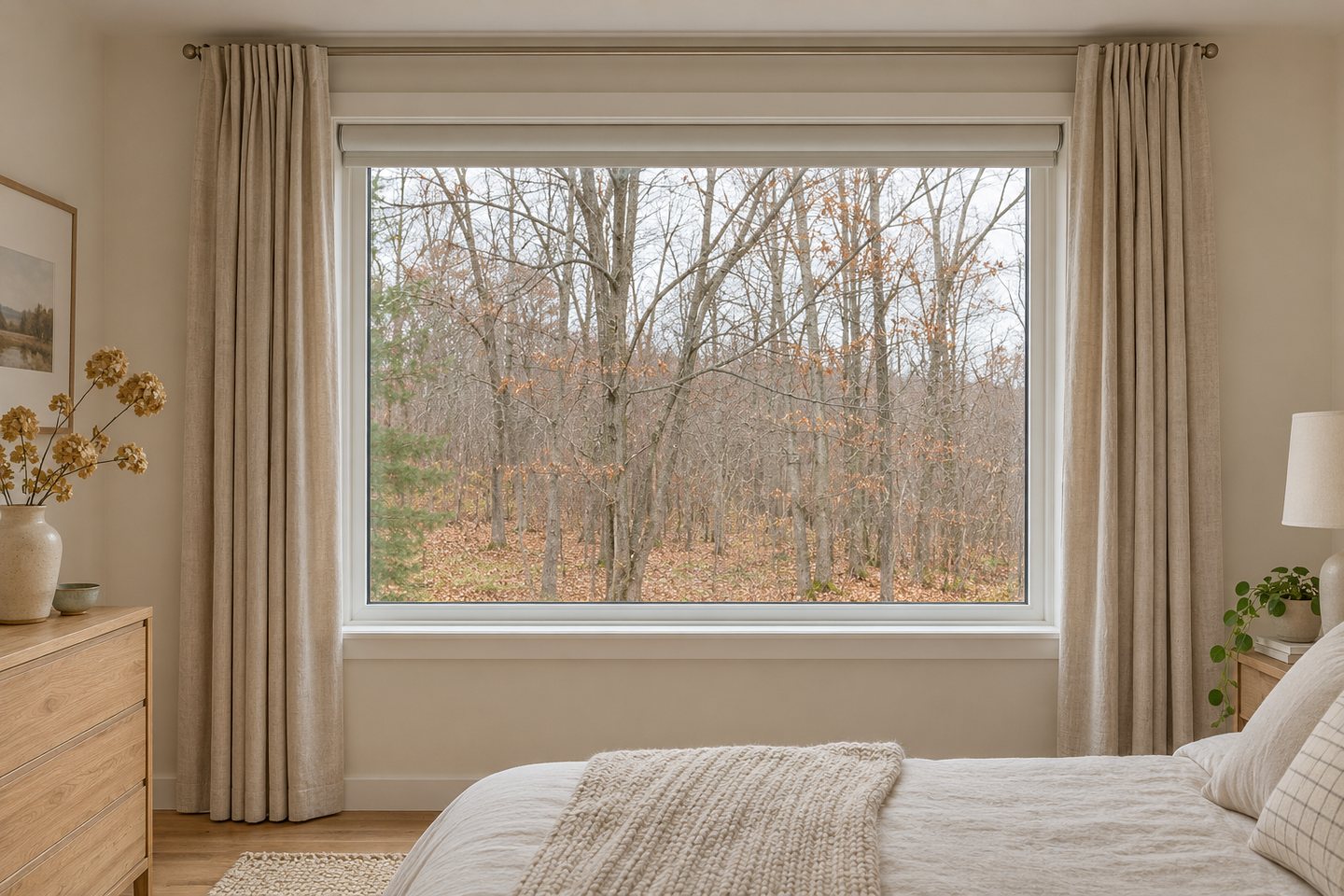
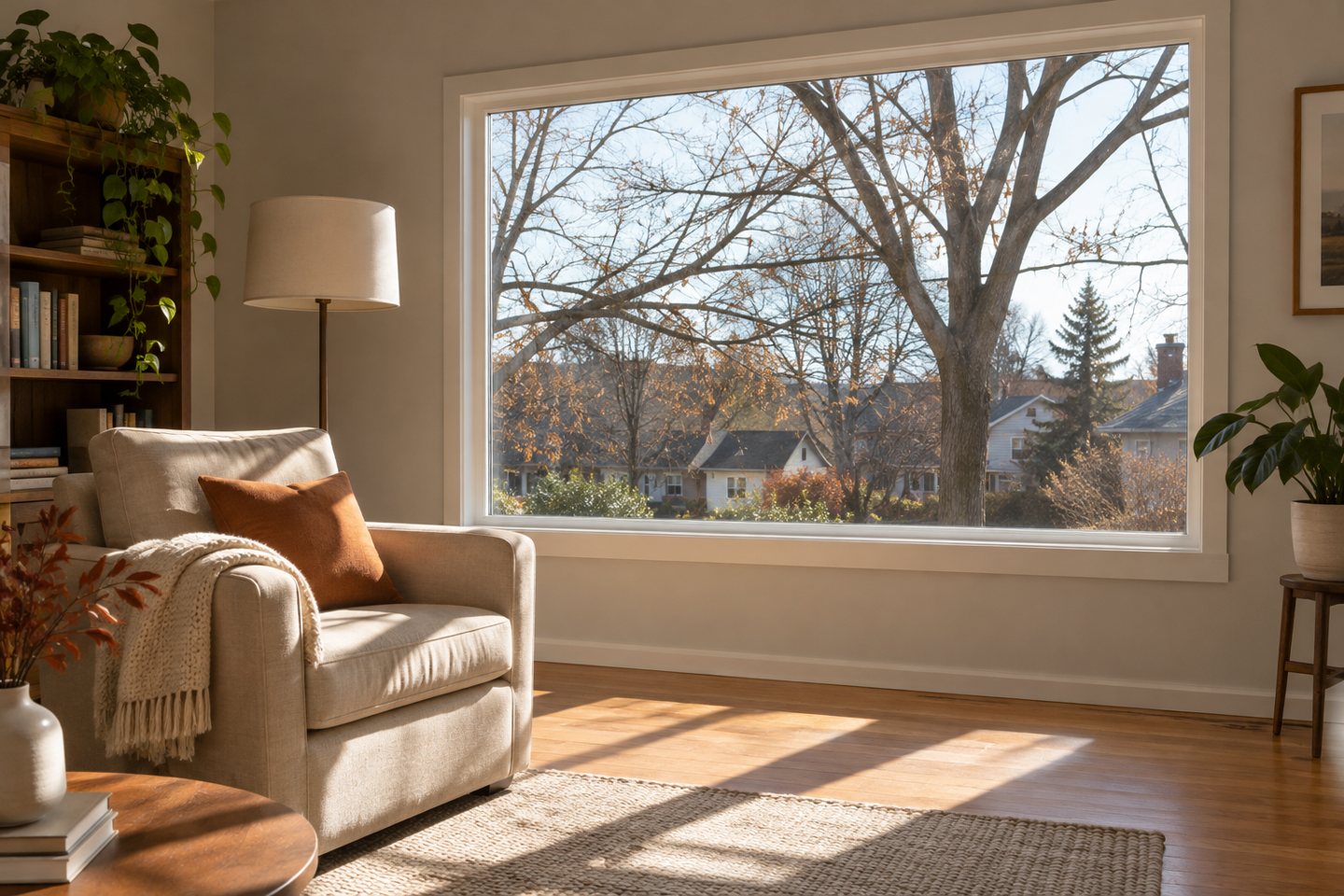
A sunny living room on a chilly November afternoon can be one of the best places in the house. That same room may feel very different on a bright summer day.
When you plan replacement windows during the heating season, it is easy to focus on keeping warmth indoors. For rooms with generous sunlight, it also helps to ask how the proposed glass will manage heat from the sun throughout the year.
Start with the room, not a glass-package nickname
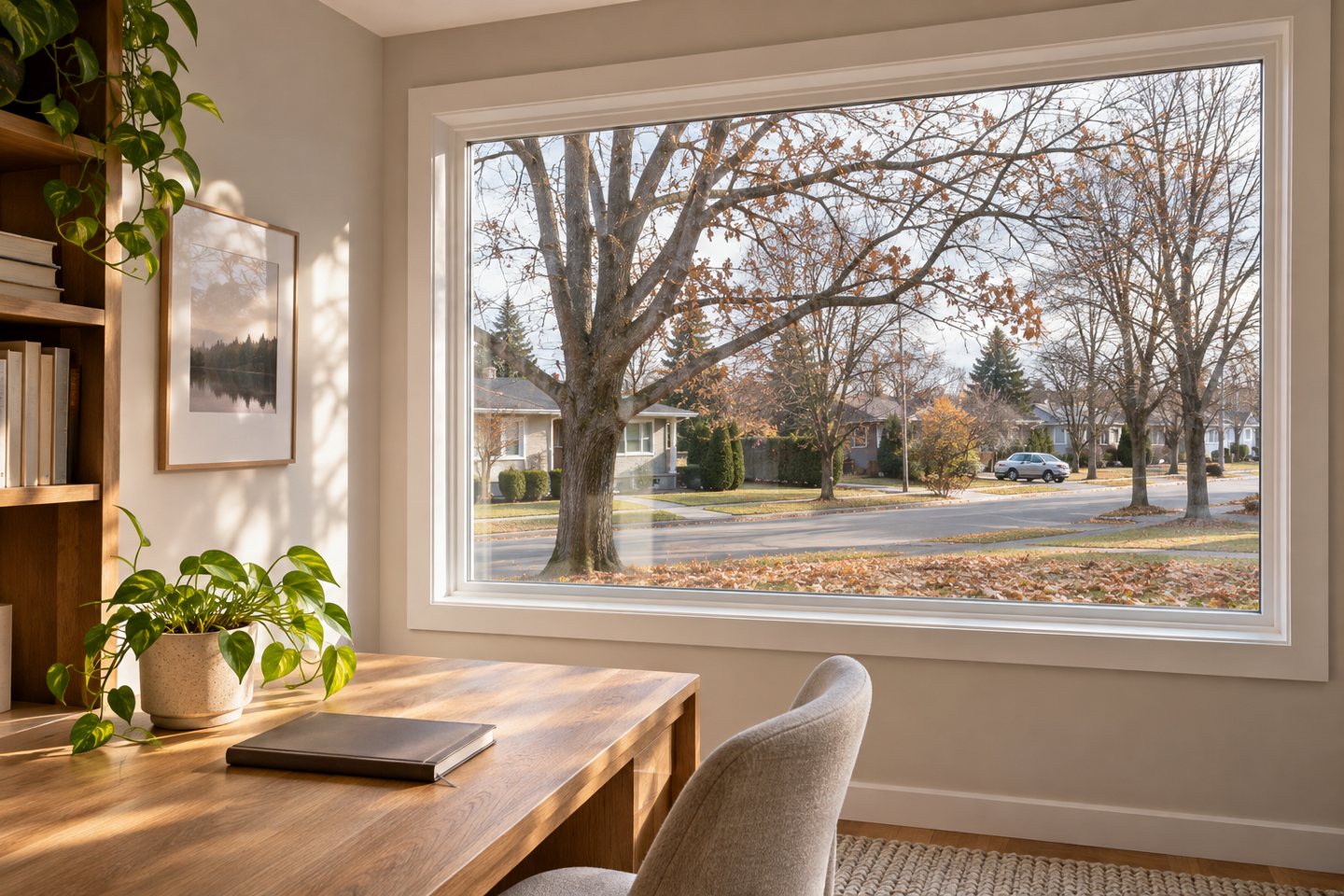
Write down when the room feels comfortable and when it becomes difficult to use. Does afternoon sunshine make a favourite chair too warm? Is glare a problem at a desk? Do nearby buildings shade the glass for much of the day?
Record the direction each window faces, the approximate amount of glazing, and existing shade from trees, overhangs or neighbouring structures. Add photographs from different times of day if you have them.
These observations give your supplier a clearer brief than simply asking for the “warmest” glass. A room can need help limiting heat loss and managing strong sunshine at the same time.
Understand solar heat gain coefficient
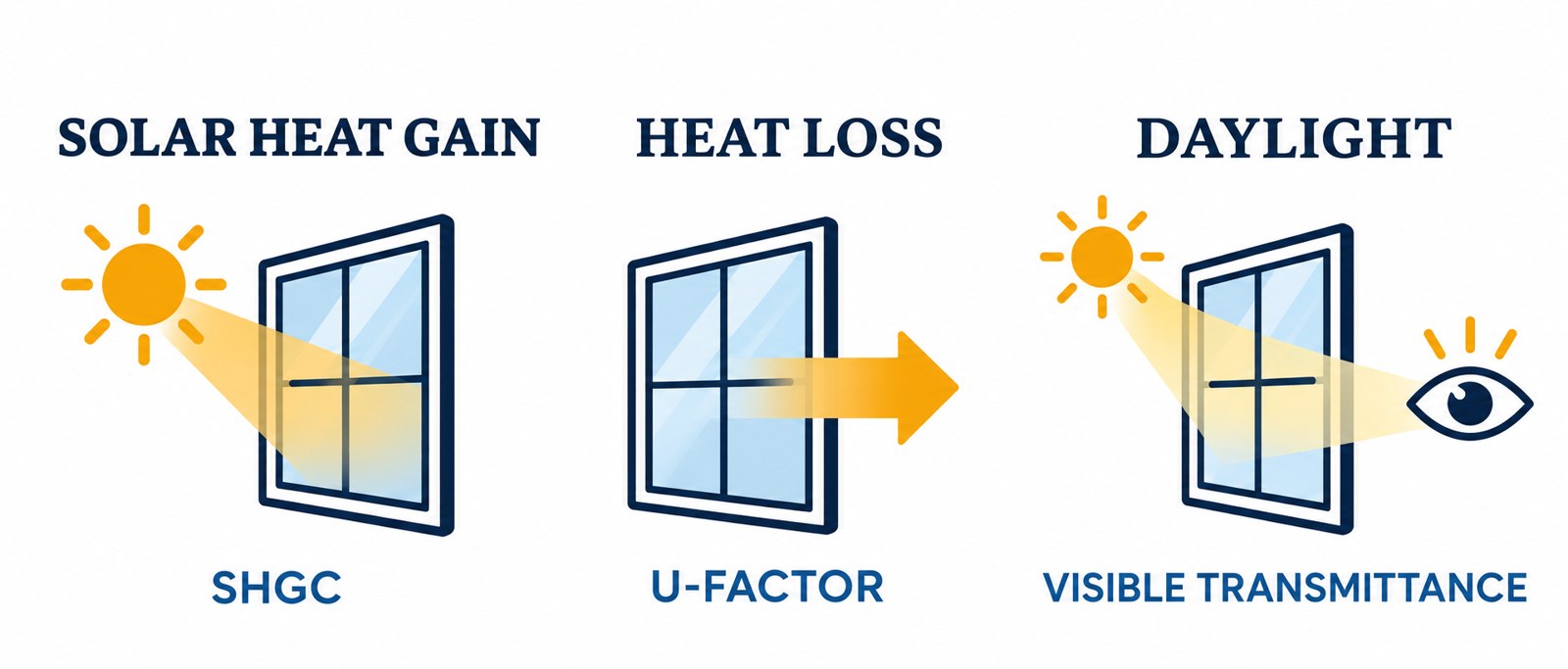
Solar heat gain coefficient, usually shortened to SHGC, describes how much of the sun’s heat passes through a window product. A lower value means less solar heat enters.
Natural Resources Canada identifies SHGC as one of the measures used to describe window performance in its ratings and certification guidance.
A lower number is not automatically the best choice for every room. The useful question is how the proposed value fits your climate, the window’s orientation, its size and the way you use the space.
Keep heat loss and sunlight separate
A window’s U-factor describes heat transfer through the product; lower values indicate less heat loss. SHGC addresses solar heat entering. Those figures answer different questions.
Ask the supplier to show both values for the exact proposed configuration. Comparing one product’s whole-window rating with another product’s glass-only figure can give a misleading impression.
If you want a refresher on the other figures on a specification sheet, see our guide to comparing window energy ratings.
Think about summer while ordering in winter
Winter sunshine may be welcome, but that does not settle the choice for a room with extensive glazing.
NRCan’s window technology primer cautions that high solar-gain glazing can contribute to overheating in some south- or west-facing applications, particularly where glass occupies a large share of the exterior wall.
That is a reason to review the room carefully, rather than apply a single rule to every opening. Tell the supplier about summer overheating even if the appointment happens on a cold, cloudy day.
Ask about daylight as well as heat
Solar heat gain and visible light are related design considerations, but they are not interchangeable ratings. Ask how each proposed glass option affects daylight, appearance and your view.
If different glass packages are proposed for different sides of the house, ask whether any visible difference would matter where windows sit next to one another. Review available samples and written specifications before approving the order.
For background on coatings, read what Low-E glass means for Canadian homeowners. A coating name alone does not replace the performance figures for the complete window.
Include shading in the conversation
Describe the shade the room has now and any changes you are planning. Removing a tree, changing an overhang or enlarging an opening can alter the conditions around the glass.
Ask how blinds, curtains or planned exterior shading fit the proposed glazing choice. Do not assume an accessory will compensate for an unsuitable specification, and confirm compatibility before adding an aftermarket film to new glass.
If several rooms have persistent comfort problems, a broader assessment may help put the window decision in context. Our home energy evaluation guide explains what to discuss with an advisor.
Bring a short checklist to your quote review
| Bring or ask | What it helps clarify |
|---|---|
| Window direction and room photographs | Exposure and existing shade |
| Notes about summer heat and winter discomfort | The room’s needs across seasons |
| Proposed whole-window U-factor and SHGC | Heat loss and solar gain |
| Daylight and appearance questions | How the room will look and feel |
| Exact glass configuration in writing | What is actually being ordered |
Ask the supplier to explain any recommendation in terms of your room. Avoid relying on a general claim that one package is best everywhere.
Plan your Alpha Windows specification
You can explore a starting layout through the Alpha Windows estimator. Then share your sunny-room observations with the team and ask which configurations are available for your project.
Before ordering, confirm the selected glass package, its relevant ratings, the final layout and the installation scope in writing. The goal is a room you can enjoy when the winter sun appears—and when the warmer months return.