Key takeaways
- Locate the suspected air-leakage path before choosing a repair.
- Weatherstripping, hardware and perimeter air seals require different remedies.
- Damaged frames and persistent operation problems warrant an assessment.
Drafty Windows: Repair the Seal or Plan a Replacement?
A cold spot beside a window can make an otherwise comfortable room frustrating. But before ordering a replacement—or covering every visible joint with caulk—it helps to identify what you are feeling and where it starts.
A worn sash seal, a loose closing mechanism, and a gap at the frame-to-wall connection require different solutions. A window assessment should separate these issues rather than treating every chilly room as proof that the whole window has failed.
Start with observations, not a repair product
On a breezy day, close and lock the window normally. Move your hand slowly around the sash perimeter and the surrounding trim, noting where moving air seems strongest. Use no candles or open flames.
Record the room, the weather, whether the window locks easily, and any water marks. A short video or a few photos can make your service request much more useful. This is an initial check, not a substitute for professional air-leakage testing.
Also note whether the room feels cold only near the glass or throughout the space. Ask an assessor to distinguish air leakage from other comfort factors instead of assuming that every cold sensation comes through a gap.
Three places an assessor may investigate
| Location | Possible concern | What to ask |
|---|---|---|
| Around the opening sash | Worn weatherstripping or poor contact | Is the correct seal intact and evenly compressed? |
| At locks, hinges, or closing hardware | Adjustment, wear, or an alignment problem | Can the window close and lock correctly without force? |
| Around trim and the frame-to-wall connection | A discontinuity in the installation’s air seal | Does the perimeter need investigation behind the trim? |
Natural Resources Canada identifies window and door casings among the locations where air leakage can occur. Its air-leakage control guide explains why finding the path matters before sealing it.
When weatherstripping may be the right fix
Weatherstripping seals the moving parts of a window. Look for missing, loose, split, or flattened sections, but avoid pulling out an unfamiliar seal simply to inspect it.
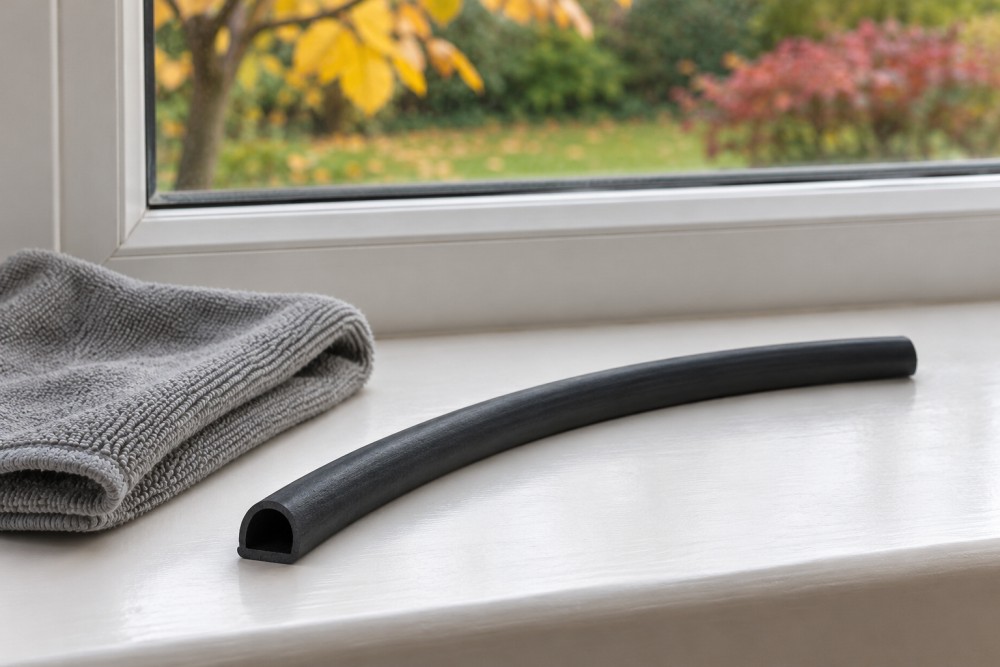
A compatible replacement must suit the window system. Adding generic foam over an existing seal can interfere with operation, so ask the supplier which profile is appropriate. Have sticking hardware or uneven closure checked too: a new seal cannot correct every alignment problem.
NRCan’s window-upgrade guidance discusses servicing hardware and improving seals as options for existing windows.
Caulk and weatherstripping have different jobs
Caulk is used for appropriate stationary joints; weatherstripping belongs at operable joints. Putting sealant across a joint that needs to move can leave a window unusable.
Do not block drainage openings, seal a required escape opening shut, or cover ventilation provisions. If you cannot identify a joint’s function, have it assessed before applying a product.
Exterior water management also involves details beyond a visible bead of sealant. Water staining or leaks after rain call for an investigation of the cause, rather than another layer of caulk.
For general background, Quebec’s homeowner guidance notes that perimeter improvements may address some drafts without replacing the entire unit.
When replacement deserves a closer look
Replacement may be worth exploring when the frame is damaged, operation remains unreliable, multiple components need work, or you want a different style or glass package. Ask for the repair option and replacement scope to be explained separately.
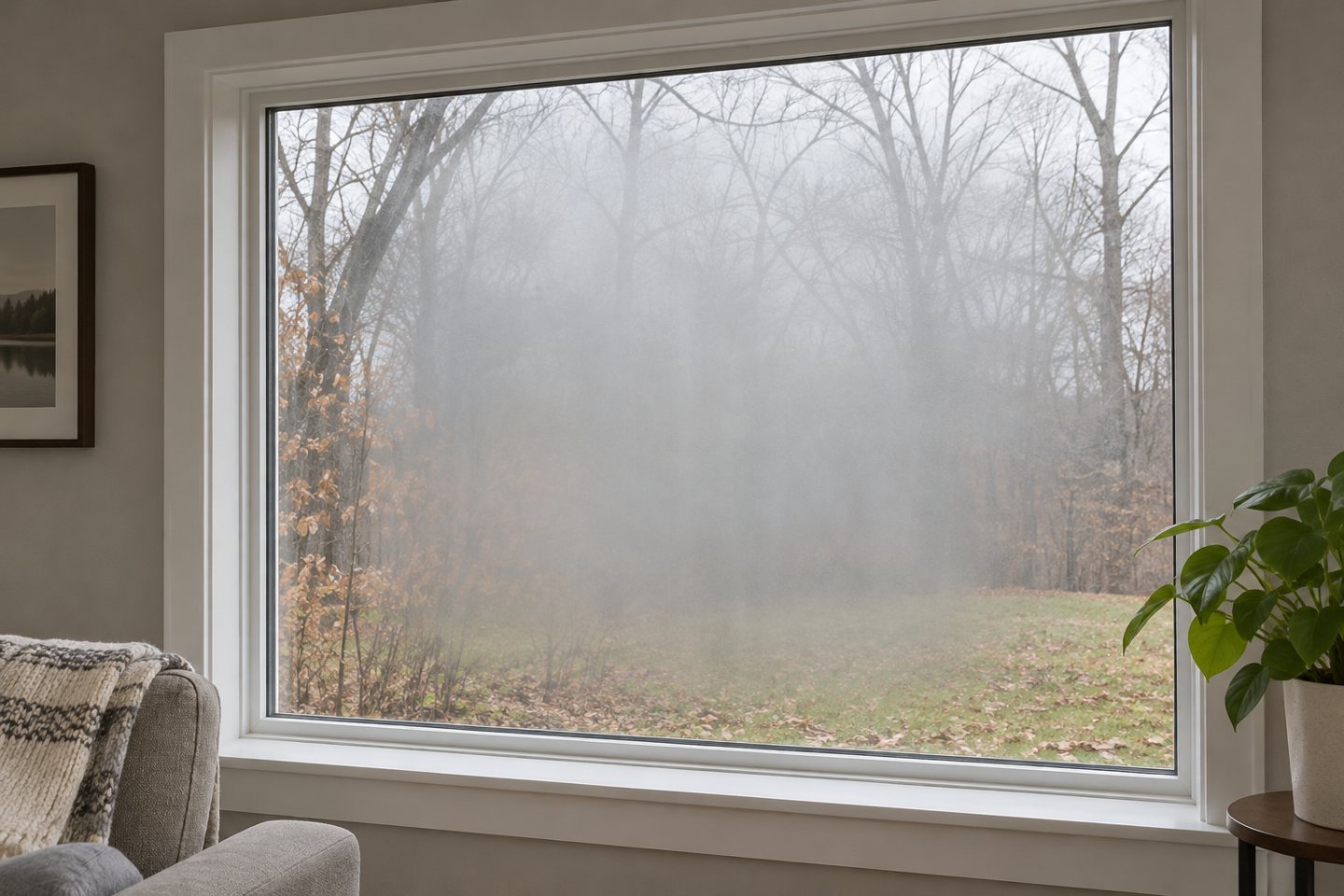
Fogging trapped inside a sealed glass unit is another distinct concern. It may call for glazing-unit service rather than a full frame replacement. Mention it when requesting an assessment so the supplier can consider the appropriate route.
Do not use age alone as the decision. The condition of the opening, availability of compatible parts, overall performance, and your plans for the home all matter.
Compare the scope before comparing the price
For a repair, ask what component is being serviced and how the result will be checked. For a replacement, ask what happens to the existing frame, how the perimeter will be air sealed, and what finishing is included.
A useful written scope should identify:
- The window and room being addressed.
- The suspected problem and proposed remedy.
- Parts, labour, and finishing included.
- Any investigation or concealed conditions excluded.
- Applicable written warranty terms.
Make the next step specific
Instead of requesting “a quote for a drafty window,” describe the location of the moving air and how the sash operates. That gives the assessor a better starting point and helps you understand the recommendation.
If replacement is the appropriate route, explore options with the Alpha Windows estimator, then confirm measurements and installation details with our team. For seasonal care, see our fall window maintenance checklist.
A better diagnosis leads to a better decision—whether that means a targeted repair or a planned replacement.