Key takeaways
- Keep the final specification, written warranties and care instructions together.
- Document symptoms with dates, room names and safe photos.
- Confirm coverage from the actual policy rather than assuming all components share terms.
Window Warranty and Service Records: What to Keep After Installation
Once new windows are installed, the order paperwork can disappear into a drawer. Keeping a small, organised project file makes it easier to request service, identify a product, and explain what has changed if a concern appears later.
You do not need a complicated system. A folder with the final order, warranty documents, photos, and a short service log is a useful start.
Keep the final specification
Save the confirmed order rather than only an early estimate. Include the room names, window configurations, finishes, and glass packages, together with any approved changes.
Label your own photos by room. If several windows look similar, a simple reference such as “upstairs rear bedroom” can help you describe the correct opening without guessing.
Keep any product labels or identifiers supplied with the order in your records. Ask the installer which identification should remain on the product and where to find it later.
Read the written warranty by component
Ask for the warranty documents that apply to your exact purchase. Do not assume that glass, frames, finishes, hardware, and installation labour all have identical terms.
Useful questions include:
- Which company handles each type of service request?
- What information is needed to open a claim?
- Are labour, removal, delivery, and reinstallation addressed separately?
- Are registration or transfer steps described?
- What care instructions and exclusions apply?
These are questions to resolve from the written policy, not promises of coverage. Keep the version provided with your order and ask about anything unclear.
Save care instructions too
Cleaning and maintenance information belongs beside the warranty. Keep guidance for glass, finishes, screens, hardware, and any special coatings.
Before adding film, using a scraper, or applying a chemical cleaner, check the instructions for your product. A suitable method for one glass package or finish may not be suitable for another.
Record routine service without turning it into a chore: date, room, work completed, and the person or company involved.
Document a concern while it is visible
A useful service report explains what you observed:
- Where the issue appears.
- When you first noticed it.
- Whether it follows rain, wind, or colder weather.
- Whether the window opens, closes, and locks normally.
- What photos or video show.
Describe the symptom rather than deciding the cause. “Water appeared on the lower trim after rain” gives a different starting point from “moisture wipes off the inside glass on cold mornings.”
Do not force sticking hardware or dismantle a window to gather evidence. Ask for guidance if it cannot be operated safely.
For fogging, identify the surface
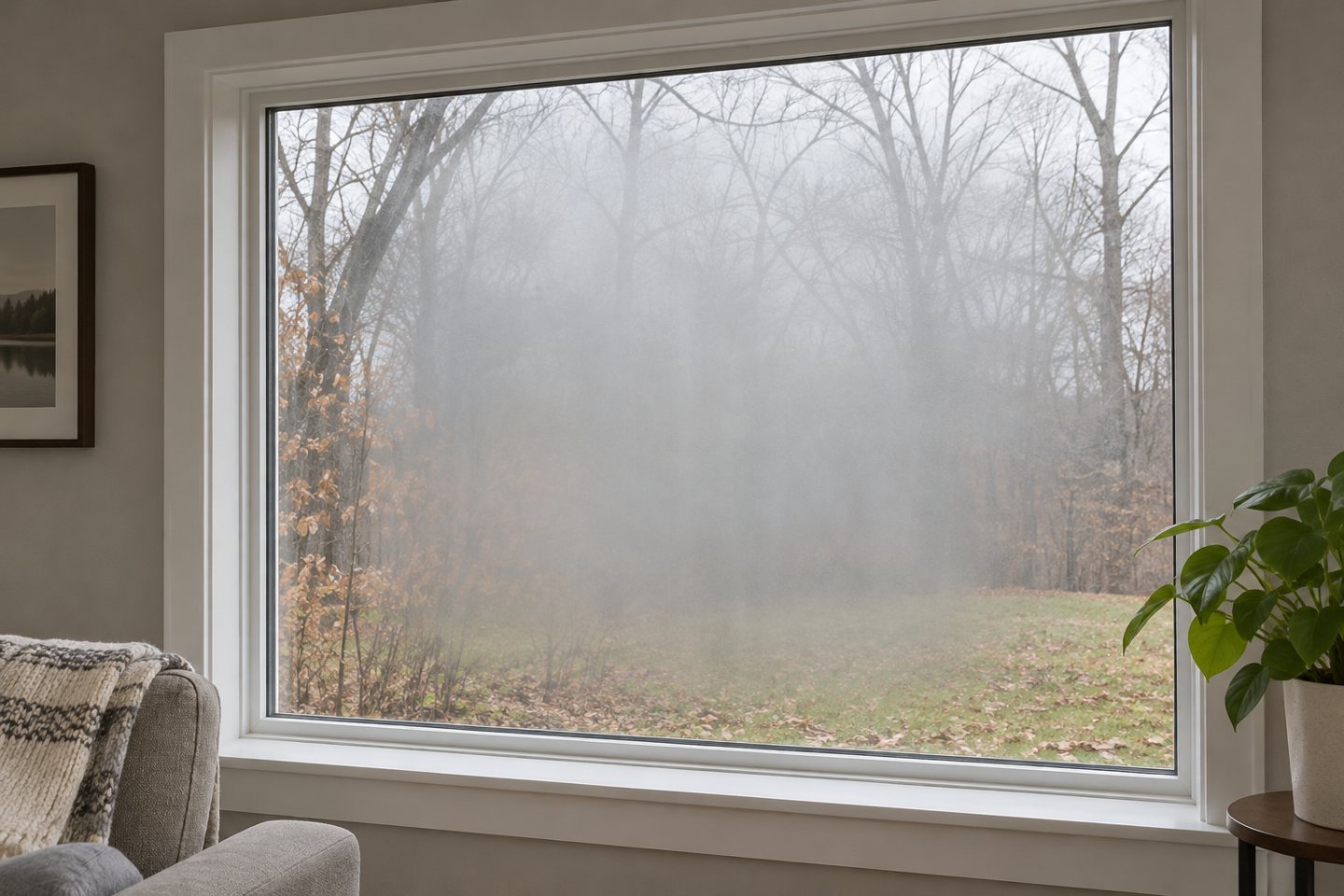
Natural Resources Canada distinguishes condensation on accessible glass surfaces from moisture between panes of a sealed insulating-glass unit. Between-pane condensation can indicate a broken seal and calls for assessment of the glass unit. See NRCan’s condensation guidance.
Take photos from a safe position and explain whether the moisture can be wiped away from indoors. The service team may need further checks before recommending a remedy.
Our guide to condensation after replacement covers the distinction in more detail.
Keep the service history together
Save appointment confirmations, inspection findings, approved work, and completion notes with the original order. After service, record what changed and whether the original symptom persists.
If a concern returns, that history helps the next conversation start with the work already done. It also avoids repeatedly reconstructing dates from memory.
A simple project-file checklist
| Record | Why it helps |
|---|---|
| Final order and approved changes | Identifies what was purchased |
| Installation date and invoice | Provides the project timeline |
| Product identifiers and room photos | Helps locate the right unit |
| Written warranties | Establishes the relevant terms |
| Care instructions | Supports appropriate maintenance |
| Service notes and correspondence | Preserves the history of a concern |
Keep a digital backup somewhere you can access if the paper copy is misplaced.
Ask Alpha Windows before you guess
If you have a concern about an Alpha Windows order, gather the order reference, room location, and a brief description with photos. Ask our team which records will help with the assessment.
If you are planning a future project, begin with the Alpha Windows estimator, then confirm the final specifications, written warranty terms, and service contact details before ordering.
A clear project file will not diagnose a window problem, but it makes getting the right help much easier.