Key takeaways
- Compare the same openings, product configurations and installation scope.
- Put finishing, exclusions and responsibility for measurements in writing.
- Resolve unclear items before approving an order or related changes.
Before You Accept a Window Quote: Compare the Scope, Not Just the Total
A window quote with a lower total can be appealing. But the number only becomes useful when you know exactly what it includes.
As late-autumn renovation offers arrive, take a few minutes to compare the work behind each proposal. Two quotes for the same house may describe different windows, different installation methods or different amounts of finishing.
Start with one list of openings
Give every window a room name or simple identifier. Compare each proposal against that same list, including quantities, layouts and which units open.
For example, a living-room combination with a fixed centre and two opening sides is a different specification from three fixed panes. A summary that says “living-room window” may hide a meaningful difference.
Ask for a drawing where proportions, divisions or opening direction are important. Confirm who checks final measurements before the order is released for production.
Identify the actual product
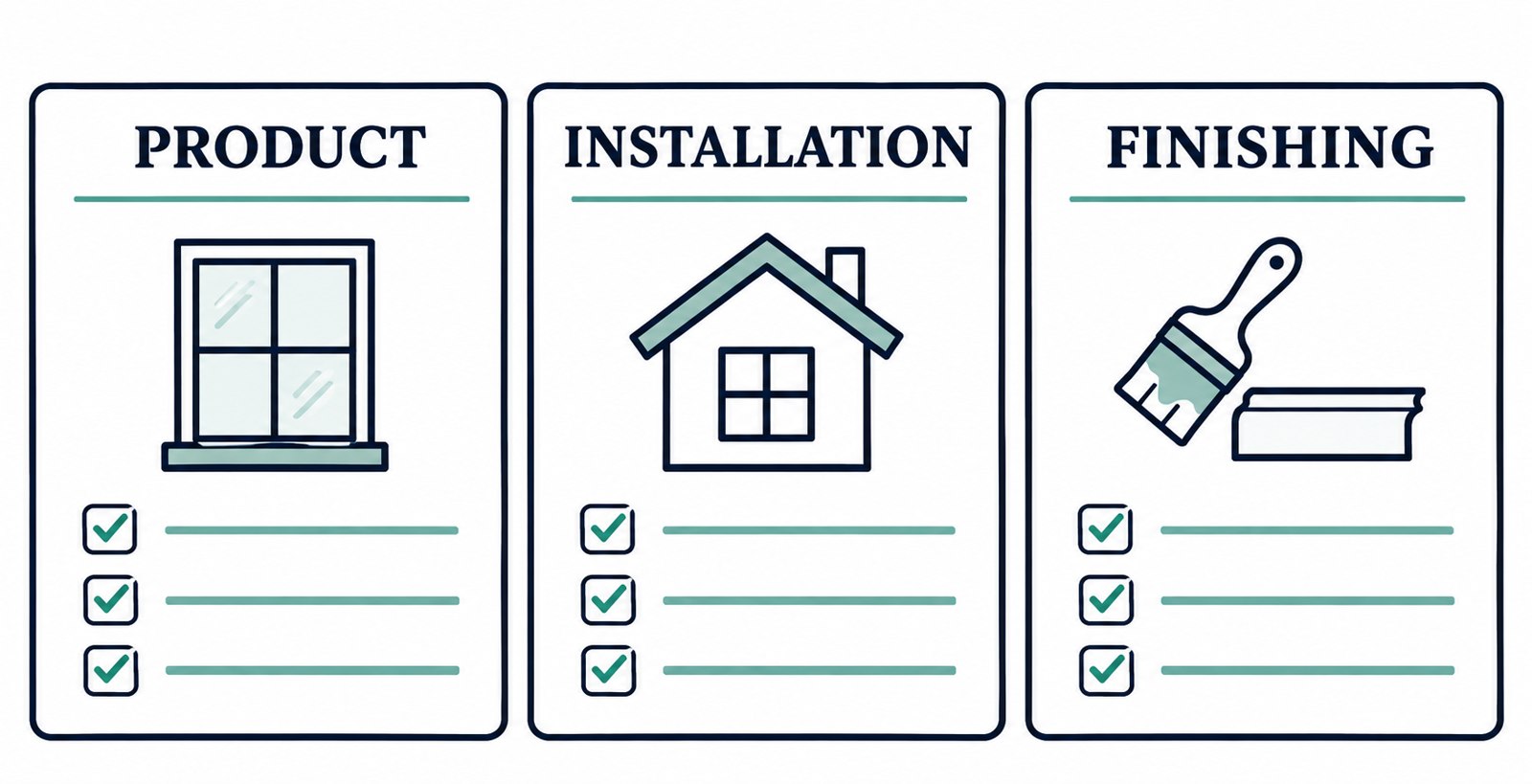
A useful proposal should let you identify what is being supplied: the window style, frame finish, glass configuration and relevant options.
If ENERGY STAR certification is part of the proposal, ask for the model information needed to verify the selected product. Natural Resources Canada’s window and door buyer’s guide recommends checking the quoted model against its searchable product list.
Do not assume that every configuration in a product family has identical ratings. Ask which information applies to the exact order.
For help reading the performance figures, see our window energy ratings guide.
Compare the installation method
Ask what will happen to the existing frame, trim and surrounding opening. A short phrase such as “installation included” does not explain those details.
Clarify the proposed method and why it suits the opening. Ask what is retained, what is removed and how the new unit connects to the surrounding construction.
Our retrofit versus brick-to-brick guide provides background for that discussion. The actual quote should still describe the scope for your home.
Make finishing visible in the proposal
Finishing can be easy to overlook when attention is on frame colour and glass.
Ask about interior trim, jamb extensions, exterior finishing, repair of disturbed surfaces and any painting or staining. Confirm the material and finish rather than assuming that “new trim” means ready-painted trim.
Also clarify removal of old units, disposal and cleanup. If you plan to reuse blinds or curtains, ask who removes and reinstalls them and whether their fit can be confirmed.
A separate finishing responsibility is manageable when it is understood before work begins.
Read exclusions as carefully as inclusions
Ask which conditions could change the work or price. Examples to discuss include concealed deterioration, unexpected opening repairs, access difficulties and changes requested after approval.
Have the supplier explain how an issue would be documented, priced and approved before additional work proceeds. Avoid relying on a verbal assumption about what “should be included.”
Ontario’s home renovation guidance emphasises written estimates, contracts and documented changes. Review the current guidance directly for the consumer rules relevant to your agreement.
Separate an estimate from an approved order
Ask what stage the document represents. Is it an initial planning estimate, a site-reviewed proposal or the final specification you are authorising?
An online estimate can help establish a starting point. Final measurements, selected options, site conditions and the agreed installation scope still need confirmation.
Before approving, check the room list, drawings, finishes and glass details together. If a revision is made, make sure the document you sign includes it.
Clarify timing without assuming a guaranteed date
Ask what the quoted timing means: manufacturing lead time, an expected installation period or a confirmed appointment.
Discuss access, weather-related arrangements and how schedule changes will be communicated. If another trade depends on the window work, explain that dependency before accepting the plan.
Confirm the payment schedule and what each payment relates to in the written agreement. Read any cancellation, change or storage terms before signing, and request clarification where needed.
Compare written warranty and service arrangements
Ask for the applicable product and installation warranty documents. Identify who handles a service request and which parts of the work each document covers.
Do not compare proposals using a headline warranty duration alone. Coverage, exclusions, labour and the service process matter too.
Save the accepted quote and final specification with the invoice and installation records. Our service-records checklist explains how to keep that file useful.
Use a simple comparison table
| Item | Confirm in each proposal |
|---|---|
| Openings | Same rooms, quantities and layouts |
| Product | Exact style, finish and glass package |
| Installation | What is removed, retained and connected |
| Finishing | Trim, exterior work and decorating responsibilities |
| Site conditions | Exclusions and approval process for additional work |
| Timing | Meaning of the stated schedule |
| Agreement | Payment, changes and applicable written terms |
| Service | Product and installation warranty responsibilities |
If one row is unclear, ask for a revised written description. That is often more useful than asking for another discount before the scope is settled.
Bring a clear brief to Alpha Windows
Use the Alpha Windows estimator to explore an initial configuration, then review measurements and the full project scope with the team.
Share your room list, appearance preferences and any concerns about the existing openings. Ask for unclear items to be resolved before approving the final order.
A clear quote gives you more than a price. It gives you a shared description of the result you are buying.